
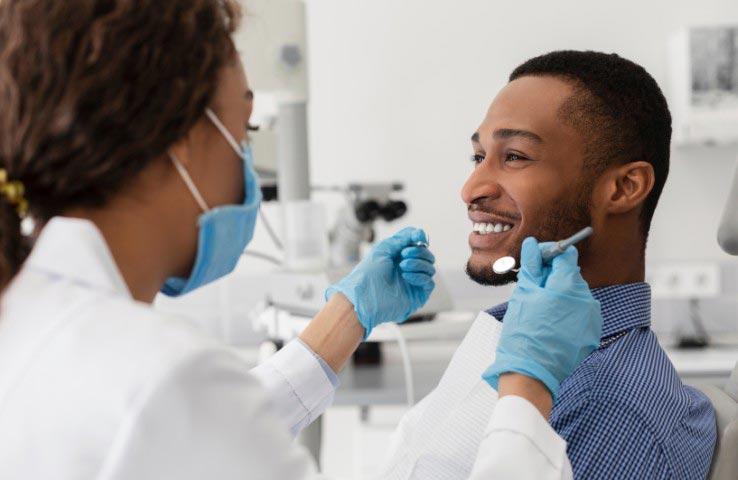
When a tooth is lost, the effects extend well beyond the visible gap. Chewing efficiency drops, neighboring teeth may shift, and the jawbone in the area where the root once sat gradually loses the stimulation it needs to maintain its volume. Dental implants address this cascade of changes by replacing the root structure itself, giving the surrounding bone a reason to stay healthy while providing a stable base for a natural-looking replacement tooth. For many patients considering their options, understanding what an implant actually does in the mouth helps make the rest of the decision easier.
What Dental Implants Are and How They Work
A dental implant is a three-part system designed to mimic the structure of a natural tooth. The first component is the implant post, a small screw made of titanium or ceramic that is placed directly into the jawbone. This post serves the same structural role as a tooth root: it anchors the restoration to the bone and transfers chewing forces into the surrounding tissue the way a natural root would. The second component is the abutment, a small connector that sits on top of the post and provides a platform for the final restoration. The third component is the restoration itself, which can be a single crown, a section of a bridge, or a full arch prosthesis depending on the patient’s needs.
What distinguishes an implant from a removable denture or a traditional bridge is the relationship between the post and the bone. Over the weeks following placement, the jawbone grows into and around the surface of the implant in a process called osseointegration. This biological bond is what gives the implant its stability. A removable denture rests on the gum surface and relies on suction or adhesives to stay in place. A traditional bridge is cemented to the teeth on either side of the gap but does not replace the root structure. An implant, by contrast, becomes part of the bone. That integration is why implants can support the kinds of chewing forces that everyday eating demands without the same risk of shifting or loosening.
The importance of osseointegration goes beyond initial stability. Because the implant post continues to transmit forces into the bone during normal use, it helps maintain the bone volume in that area. When a tooth is missing and no replacement is placed, the bone in that region tends to resorb over time. This bone loss can affect the fit of future restorations and, in more advanced cases, can change the contour of the face. An implant that is well integrated and actively used helps slow or prevent that process.
Types of Dental Implant Solutions
The right implant solution depends on how many teeth are missing, where they are located, and the condition of the surrounding bone and soft tissue. The main categories differ in scope and in how they are supported.
Single-tooth implants replace one missing tooth. A single post is placed in the jawbone at the site of the lost tooth, and a custom crown is attached through the abutment. The advantage of this approach is that the adjacent teeth remain untouched. A traditional bridge, by comparison, requires the neighboring teeth to be reduced and capped to serve as anchors.
Implant-supported bridges are used when two or more adjacent teeth are missing. Two or more implants are placed to support a bridge that spans the gap. The number of implants needed depends on the length of the gap and the available bone. This option avoids the need to prepare healthy teeth on either side, which is a significant advantage for patients who want to preserve as much natural tooth structure as possible.
Full arch and full mouth implant prostheses are designed for patients who have lost most or all of their teeth in one or both arches. Rather than replacing each tooth individually, a series of implants is used to support a complete arch of teeth. This can be a fixed prosthesis that is cemented or screwed into place, or a removable prosthesis that snaps onto the implants for retention. The fixed option provides the closest feel to natural teeth because it does not move during function. The removable option can be easier to clean and may be appropriate for patients who prefer a design they can take out for hygiene.
The distinction between fixed and removable options matters for daily comfort. A fixed restoration behaves like natural teeth: it stays in place during chewing, speaking, and smiling without the need for adhesives or clips. A removable implant-supported prosthesis is more secure than a conventional denture because the implants provide mechanical retention, but it still requires removal for cleaning. The choice between the two often comes down to the patient’s priorities around convenience, maintenance, and the number of implants the bone can support.
Benefits for Oral Function and Health
The functional benefits of dental implants are straightforward to describe but significant in daily life. An implant-supported crown or bridge can handle the chewing forces of a wide range of foods. Patients who have struggled with loose dentures or avoided certain foods because of discomfort often find that implant-supported restorations make it possible to eat with the same ease they had before losing their teeth. This matters not only for nutrition but also for the simple pleasure of eating without self-consciousness or worry.
Speech is another area where implants can make a difference. Missing front teeth or loose dentures can affect the way air flows through the mouth and the way the tongue positions itself during speech. An implant-supported restoration that is stable and properly shaped can help restore more natural speech patterns, particularly for sounds that depend on precise tongue-to-tooth contact.
Perhaps the most consequential long-term benefit for oral health is the preservation of bone. As mentioned earlier, the jawbone relies on the mechanical stimulation provided by tooth roots to maintain its density and volume. When a tooth is lost, that stimulation stops, and the bone in that area gradually thins. Over time, this resorption can narrow the ridge, reduce the available space for future restorations, and contribute to a sunken appearance in the lower face. An implant that is integrated and in use provides that ongoing stimulation, helping to maintain the bone structure that supports both function and facial contour.
Aesthetic and Confidence Advantages
A well-placed implant-supported restoration is designed to look and feel like a natural tooth. The crown is shaped, shaded, and textured to match the surrounding dentition, and because it is anchored in the bone rather than resting on the gum, it does not shift or create the gaps that can develop with a conventional denture. For patients who have been self-conscious about their smile, this visual and physical stability can make a real difference in how comfortable they feel in social and professional settings.
The confidence benefit is not just about appearance in a mirror. When a patient does not have to worry about a denture slipping, a bridge feeling loose, or a gap being visible while speaking or laughing, they tend to engage more freely. Conversations, meals with friends, professional presentations, and everyday interactions all become less mentally taxing. This reduction in self-consciousness is one of the reasons patients often describe the experience of receiving implants as a relief rather than just a cosmetic improvement.
The stability of an implant also means that the restoration maintains its position over time. Unlike a removable denture, which can change fit as the underlying bone and gum tissue shift, an implant-supported crown or bridge stays where it was placed. This consistency helps patients feel assured that their smile will look the same from day to day, which supports a sense of normalcy that is easy to underestimate until it is missing.
The Treatment Journey From Consultation to Restoration
The process of receiving a dental implant typically moves through several stages, and the timeline varies from patient to patient based on the number of teeth being replaced, the condition of the bone, and whether preparatory work is needed.
The first step is a comprehensive consultation and evaluation. This involves a clinical examination, imaging, and a discussion of the patient’s goals and medical history. The purpose is to determine whether the patient is a suitable candidate and to plan the treatment with enough precision that the implant can be placed in the correct position and angle for the final restoration to function well.
If the evaluation reveals that the bone volume is insufficient or that a failing tooth needs to be removed, preparatory procedures may be performed before implant placement. Bone grafting can build up the ridge to provide adequate support. Soft tissue grafting may be used to improve the gum contour around the planned implant site. These steps add time to the overall treatment but are important for long-term stability and aesthetics.
Once the site is ready, the implant post is placed in a surgical procedure. After placement, a healing period is needed for osseointegration to occur. This typically takes several months, though the exact duration depends on the location of the implant and the quality of the bone. During this healing period, a temporary restoration may be placed so the patient is not without a tooth in that area. The temporary restoration is designed to protect the site and provide basic function and appearance while the implant integrates.
After the healing period, the final restoration is fabricated and attached. At this point, the implant is fully integrated and ready to support normal chewing forces. The entire process, from initial consultation to final restoration, can range from a few months to over a year depending on the complexity of the case.
Who Is a Good Candidate
Candidacy for dental implants is determined by a combination of oral and general health factors. There is no single rule that applies to every patient, and a thorough evaluation is the best way to understand whether implants are a suitable option in a given situation.
Oral health is a primary consideration. The gums surrounding the implant site need to be healthy and free of active infection. A history of periodontal disease is not automatically a disqualifier, but active gum disease needs to be treated and stabilized before implant placement. The long-term health of an implant depends on the health of the surrounding soft tissue, so establishing periodontal stability is an important part of planning.
Bone volume and quality are the other key dental factors. An implant needs sufficient bone to be placed at the correct depth and angle. When the bone is adequate, the implant can be placed directly. When it is not, grafting procedures can build up the ridge over time. The availability of bone is one of the main reasons why a comprehensive evaluation, including imaging, is essential before treatment begins.
General health also plays a role. Conditions that affect healing, such as uncontrolled diabetes or immune system disorders, can influence the success of implant placement. Smoking can impair the healing process and increase the risk of complications. These factors do not necessarily rule out implant treatment, but they affect how the treatment is planned and what the patient can expect in terms of healing time and long-term maintenance.
The most important point is that candidacy is an individual determination. Two patients with the same number of missing teeth may have very different treatment plans based on their bone quality, gum health, medical history, and personal goals. A personalized evaluation is what allows a dentist to determine the best approach for a specific patient rather than applying a one-size-fits-all protocol.
Long-Term Maintenance and Care
Dental implants are designed to last for decades, and with proper care they can potentially last for the rest of a patient’s life. Their longevity depends on a combination of surgical technique, the quality of the final restoration, and the habits the patient maintains over time.
Daily oral hygiene is the foundation of implant care. Brushing and flossing around an implant follow the same basic principles as caring for natural teeth, though the technique may need slight adjustment. The area around the implant post and abutment can be sensitive, and patients may find that interdental brushes or water flossers help clean around the restoration more effectively than traditional floss alone. The goal is to remove plaque from around the implant to prevent inflammation of the surrounding gum tissue, a condition called peri-implant mucositis. If left unaddressed, this inflammation can progress to a more serious condition that affects the bone supporting the implant.
Regular professional check-ups and cleanings are equally important. These visits allow the dental team to monitor the health of the implant and surrounding tissues, check the fit and condition of the restoration, and address any early signs of trouble before they become more significant. The frequency of these visits depends on the patient’s individual risk factors and the recommendations of their dentist.
Certain habits and risk factors can affect implant health over time. Smoking, for example, is associated with a higher risk of implant complications and peri-implant disease. Clenching or grinding the teeth (bruxism) can place excessive force on the restoration and, over time, may contribute to mechanical issues. A well-fitting night guard can help protect the implant and the surrounding structures in patients who grind their teeth.
There are signs that warrant prompt professional attention. These include persistent swelling, redness, or tenderness around the implant site; bleeding that does not resolve with gentle brushing; a change in the way the restoration feels or fits; or any loose sensation in the implant or crown. These symptoms may indicate that the surrounding tissue or the mechanical connection is under stress, and early evaluation can often prevent a minor issue from becoming a more serious one.
Personalized Implant Care at Gitlin Dental Group
At Gitlin Dental Group, implant treatment is planned with the same level of attention to detail that goes into every aspect of care. The team offers implant surgery, full arch and full mouth solutions, and both fixed and removable implant-supported options, including zirconia fixed bridges. Guided surgery with computer-guided implant placement allows the team to map the surgical and prosthetic work in advance, supporting precise positioning that accounts for the final restoration from the start.
The approach at both the Bethpage and Roslyn locations integrates implant care with the full range of preventive, cosmetic, and restorative services. This means that a patient who needs bone grafting, soft tissue work, and a full arch restoration can receive all of those components within the same practice, with a team that has advanced training in implantology, bone and soft tissue grafting, and digital dentistry. The result is a treatment plan that is coordinated from the first consultation through to the final restoration, with each step designed to support the next.
If you are considering dental implants and would like to understand what the process might look like for your specific situation, the team at Gitlin Dental Group in Bethpage or Roslyn is available to walk you through a comprehensive evaluation and discuss the options that fit your goals.
A missing tooth is more than a cosmetic concern. It affects how you chew, how your face is supported, and how confident you feel in everyday interactions. Dental implants address all of those dimensions by replacing the root structure that keeps the bone healthy and the restoration stable. If you are in the process of researching your options, a consultation is the natural next step. It is the point where general information becomes a specific plan tailored to your mouth, your health, and your priorities.
FAQ
Once placed, the implant integrates with the bone through osseointegration, a process where bone cells grow around the implant surface. An abutment is then attached to the implant and a custom restoration is secured to the abutment to restore function and appearance.
Because the implant is anchored in bone, it can support chewing forces similar to natural teeth and helps preserve surrounding bone structure that would otherwise be lost after tooth loss.
Dental implants restore chewing efficiency and speech clarity, allowing more comfortable eating of a varied diet and improved oral function over time.
They also provide aesthetic and facial support benefits. By filling the space left by missing teeth, implants help maintain facial contours and prevent the sunken appearance that can develop with long-term tooth loss.
Many people report improved self-confidence and quality of life after implant treatment, as implants look and feel more like natural teeth than removable options and do not require altering adjacent healthy teeth for support.
Good candidates generally have healthy gums, sufficient jawbone volume to support an implant, and are committed to good oral hygiene and regular dental care. Overall health and the ability to heal from minor surgery are also important considerations.
Candidacy is determined after a comprehensive clinical evaluation, which may include a medical history review, oral examination and imaging to assess bone quality and quantity. Some patients may need preparatory treatments such as bone grafting or tooth extraction before implant placement.
Factors such as uncontrolled systemic conditions, active gum disease, heavy smoking, or poor oral hygiene can increase risk and may require management before implant treatment is recommended.
The process typically begins with a consultation and evaluation to confirm candidacy and develop a treatment plan. Imaging and planning help determine implant size, position and whether preparatory procedures are needed.
Implant placement is a surgical procedure where the implant post is positioned in the jawbone. A healing period follows to allow osseointegration, which can take several months. A temporary restoration may be used during healing when appropriate.
After integration, an abutment is placed and a final crown, bridge or prosthesis is fabricated and delivered. At Gitlin Dental Group, we emphasize a personalized approach and map surgical and prosthetic work in advance to support precise outcomes, with options including guided surgery with computer-guided implant placement.
Healing time varies by individual, site and treatment complexity. Osseointegration, the bonding of implant to bone, generally takes several months and is necessary before loading the implant with a final restoration.
Initial soft tissue healing around the surgical site often occurs within one to two weeks, but full bone integration can take three months or more. Treatment time from start to finish can range from a few months to over a year depending on whether preparatory procedures are needed.
Temporary restorations may be used during the healing phase to maintain function and aesthetics while the implant integrates.
Dental implants are designed for long-term use and have the potential to last for decades, and in many cases for the rest of your life with proper care.
Longevity is influenced by surgical technique, clinical experience, implant quality, and patient habits such as oral hygiene, regular dental check-ups and avoiding habits that place excessive stress on teeth.
Maintaining healthy gums and bone around the implant through daily brushing and flossing and routine professional cleanings supports the stability of the implant over time.
Implant options are chosen based on the number of missing teeth and patient needs. A single implant can support one crown for a single missing tooth.
Multiple implants can support a fixed bridge to replace several adjacent missing teeth without involving healthy neighboring teeth. For extensive tooth loss, full arch or full mouth implant solutions can support a fixed hybrid prosthesis or denture.
Implant materials commonly include titanium posts with ceramic components, and restorations can be made from materials such as zirconia for strength and aesthetics.
Implants should be cleaned daily just like natural teeth. Brush twice daily with a soft-bristled toothbrush and fluoride toothpaste, paying attention to the gumline around the implant.
Daily flossing or interdental cleaning helps remove plaque from between teeth and around the abutment. Water flossers may be recommended for some patients for additional cleaning support.
Regular dental check-ups and professional cleanings are important to monitor implant health, remove hard deposits and detect early signs of peri-implant issues. Avoid smoking and limit sugary foods and beverages to support long-term health.
As with any surgical procedure, dental implant placement carries risks such as infection, bleeding, and discomfort at the surgical site. Nerve or sinus injury is possible depending on implant location, which is why careful planning and imaging are important.
Implant failure can occur if osseointegration does not occur properly, often related to surgical factors, inadequate bone volume, or patient factors such as uncontrolled health conditions or smoking.
Over time, peri-implant disease from plaque accumulation can affect the tissues and bone around the implant. Early detection through regular professional care improves outcomes.
Cost varies based on the number of missing teeth, the duration of tooth loss and resulting bone changes, the materials used for the implant components and restoration, and whether additional procedures are needed.
Preparatory treatments such as extractions, bone grafting or sinus lifts, and the choice between single implant, bridge or full arch replacement can affect overall treatment cost and timeline.
Because circumstances are individual, a detailed treatment plan and consultation are needed to understand expected scope and options. We assist with dental financing applications and insurance claim filing to help patients understand coverage and payment options.